

A cochlear implant is a medical device designed to provide a sense of sound to individuals with severe to profound deafness.
Unlike hearing aids, which amplify sound, cochlear implants work by directly stimulating the auditory nerve. This allows sound signals to bypass damaged parts of the inner ear and be sent to the brain.
For some people, this can improve access to sound. For others, the experience is more limited or requires significant effort and training to use effectively.
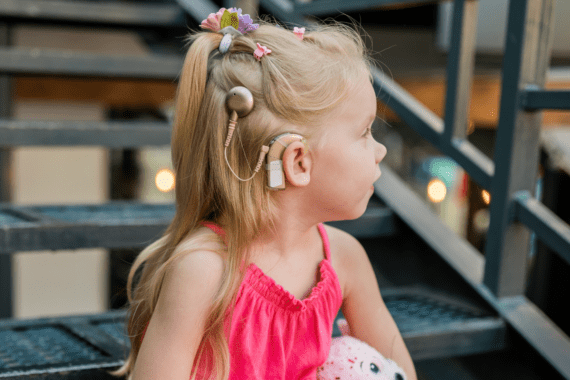
What is a cochlear implant?
A cochlear implant (CI) is an electronic device that helps people with significant hearing loss detect sound. It does not restore natural hearing. Instead, it provides a different way of accessing sound by converting it into electrical signals.
These signals are sent directly to the auditory nerve, which then carries them to the brain. The brain learns to interpret these signals over time.
Cochlear implants are typically considered when hearing aids no longer provide enough benefit.
How does a cochlear implant work?
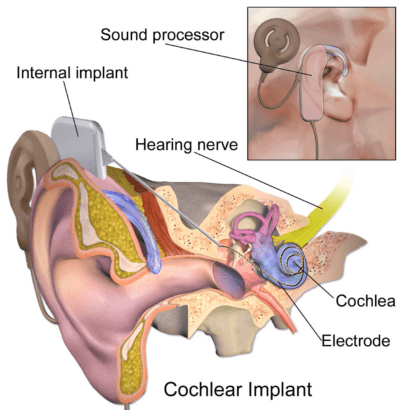
A cochlear implant has both external and internal components that work together to process sound.
External components
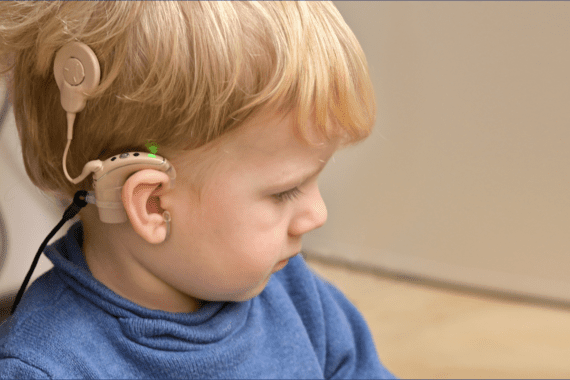
The external portion is worn outside the ear and usually includes:
• A microphone that picks up sound from the environment
• A speech processor that organizes and filters that sound
• A transmitter that sends signals to the internal device
The processor converts sound into digital signals that can be transmitted through the skin.
Internal implant
The internal portion is surgically placed under the skin and includes:
• A receiver that picks up signals from the external transmitter
• An electrode array inserted into the cochlea
The electrodes stimulate the auditory nerve directly using electrical impulses.
How sound is processed
Instead of amplifying sound like a hearing aid, the cochlear implant:
1. Captures sound through the microphone
2. Converts it into electrical signals
3. Sends those signals to electrodes inside the cochlea
4. Stimulates the auditory nerve
The brain then interprets these signals as sound. This process is different from natural hearing and takes time to adapt to.
Who gets cochlear implants?
Cochlear implants may be used by:
• Children born with severe to profound levels of deafness
• Adults who lose significant hearing later in life
• Deaf and hard of hearing individuals who receive little benefit from hearing aids
Candidacy depends on several factors, including the level of hearing loss, overall health, and communication goals.
In infants and children, decisions are often made by parents in consultation with medical and educational professionals. These decisions can carry long-term implications for language development and communication access.
What can cochlear implants do and not do?
What they can do
For some individuals, cochlear implants can:
• Improve awareness of environmental sounds
• Support speech perception
• Assist with communication in certain settings
Outcomes vary widely. Some people develop strong listening and spoken language skills, while others experience more limited benefits.
What they do not do
Cochlear implants do not:
• Restore natural hearing
• Guarantee clear speech understanding
• Work the same way for every person
Using a cochlear implant often requires ongoing auditory training and adaptation. Even with consistent use, sound quality is different from typical hearing.
Why do people choose cochlear implants?
People choose cochlear implants for different reasons, including:
• Increased access to sound
• Communication preferences
• Educational or environmental factors
• Family decisions, especially for children
For some, cochlear implants are one of several tools they use. For others, they become a primary way of accessing sound.
Deaf perspectives on cochlear implants
Within the Deaf community, cochlear implants were at one time considered controversial due to the initial perception that the medical profession was attempting to “fix” their deafness.
However, in the decades since their FDA approval, the Deaf community now generally views cochlear implants as an optional tool that is best used in combination with sign language and visual access rather than an attempt to replace it. After all, CIs are not a cure for deafness.
The National Association of the Deaf recognizes that some individuals benefit from cochlear implants, but emphasizes that outcomes are not guaranteed and require significant time and training.
The NAD also stresses several key points:
• Deaf individuals should have the right to choose whether or not to use cochlear implants
• Deaf children should have access to American Sign Language (ASL) and Deaf culture, regardless of implantation
• Cochlear implants do not eliminate the need for communication access or accommodations
For many, the conversation around cochlear implants is not really about sound. It is also about language, identity, and access.
Final Thoughts
Cochlear implants are complex devices with a wide range of outcomes and experiences.
Understanding what they are, the benefits as well as the limitations, can help create more informed and realistic expectations.
In a follow-up article, we’ll look at how cochlear implants have been viewed within the Deaf community over time and how those perspectives have evolved.