

ASL Interpreters are more visible now than ever. Largely due to their presence during televised emergency broadcasts and other public events. Even the casual observer now finds “the signer” a familiar presence. Yet, they may be wondering but not sure who-all to ask what an ASL interpreter really is and what are their job entails? Find out here as well as why it’s important you know this (yes, you)!
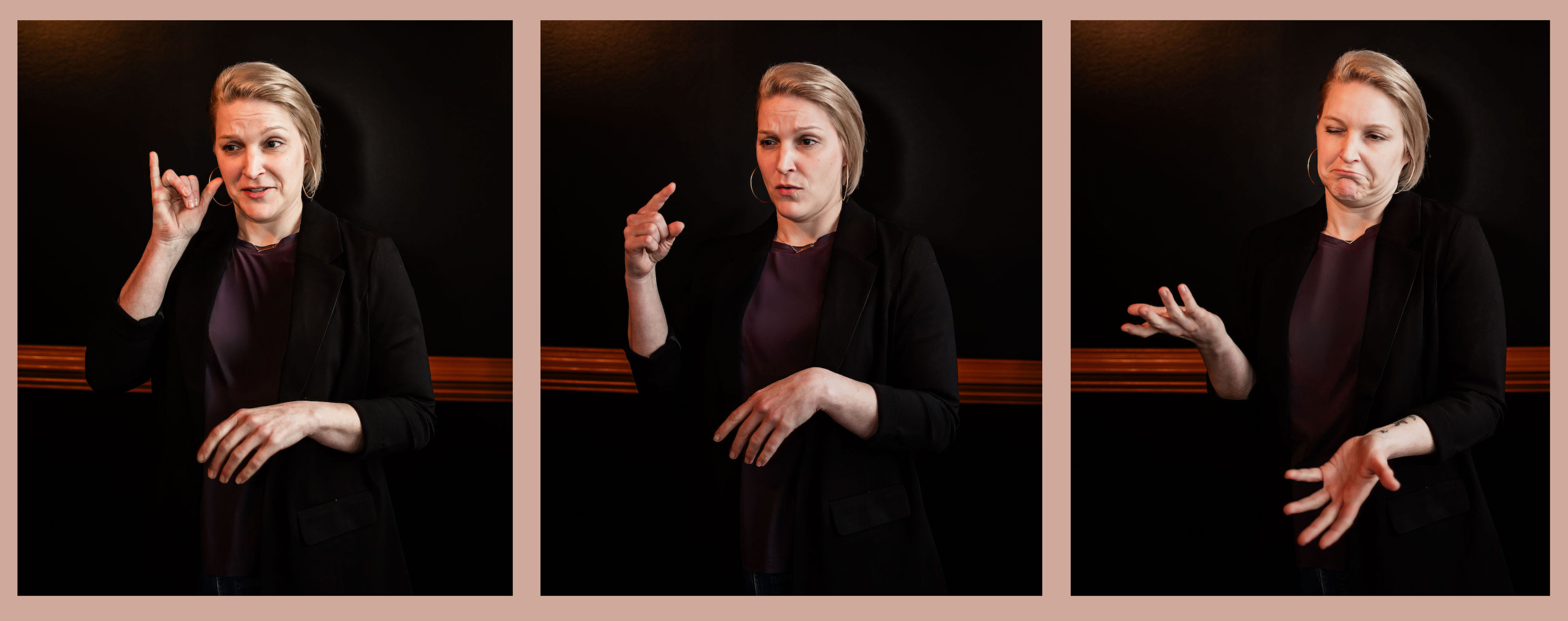
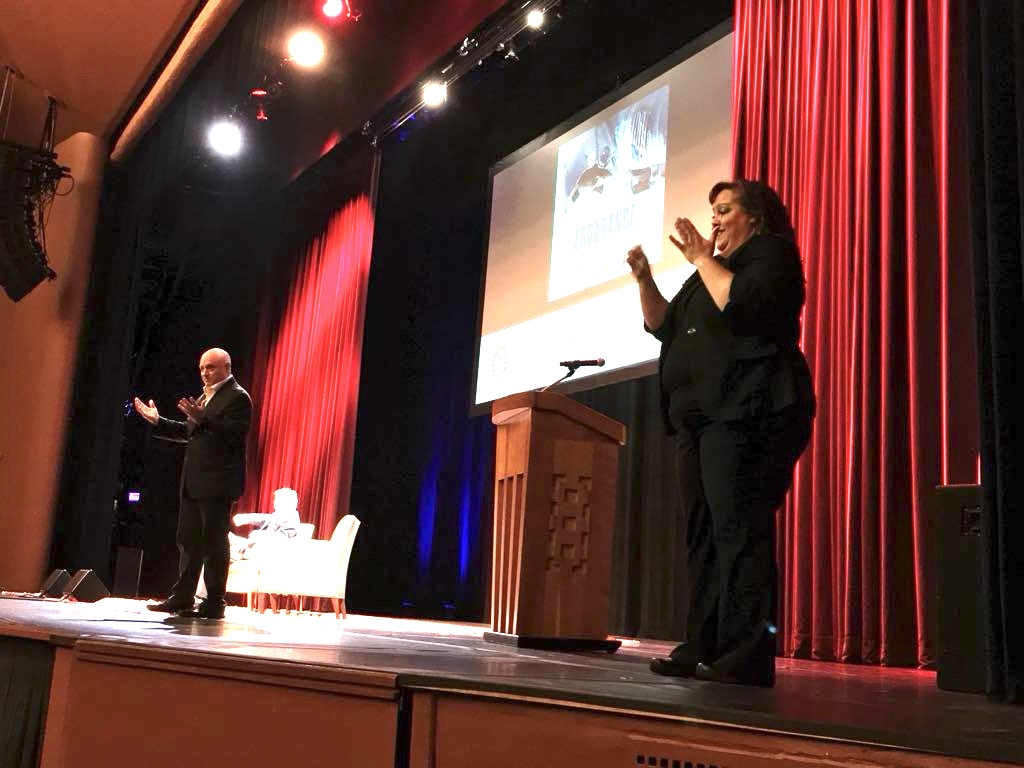
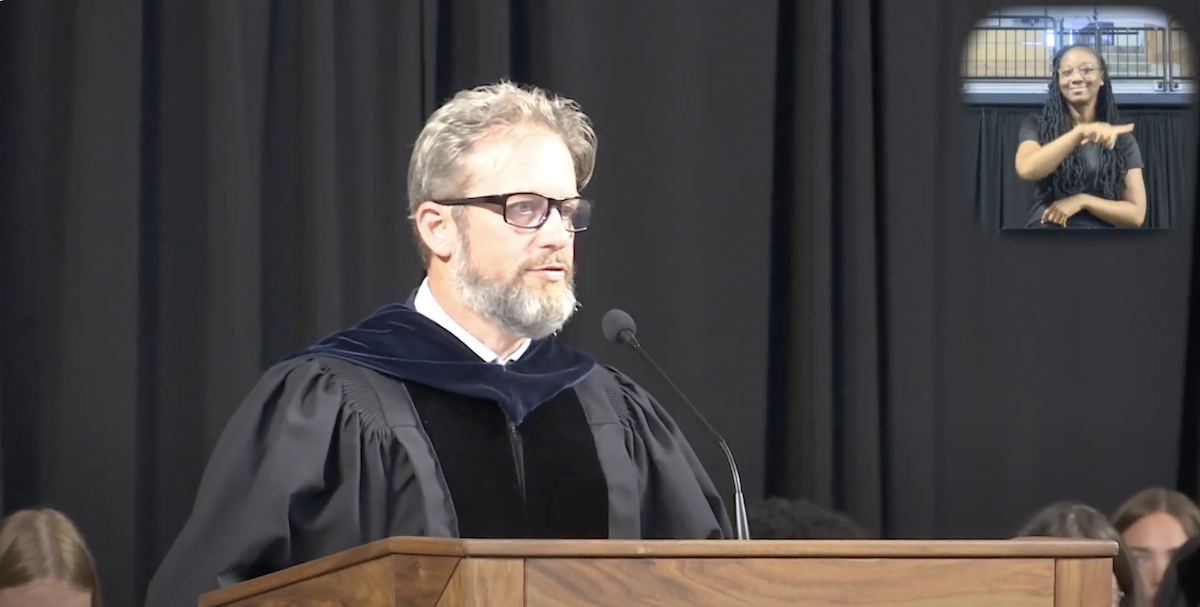
If you’ve ever attended a conference, a class or shown up for a meeting where there was a professional looking individual either standing or sitting to the side of the official speaker while using sign language, you have seen an ASL interpreter at work.
But what do ASL interpreters do? What are their qualifications? Where do they work? And why are they important? The answers may surprise you!
What is an American Sign Language or ASL Interpreter?
ASL interpreters are highly trained professionals that serve as neutral intermediaries who facilitate effective communication between Deaf and hearing individuals – a vital communication tool that allows deaf and hard of hearing individuals to fully participate in conversations and events that take place throughout most aspects of their lives.
ASL interpreters are experts specifically in the spoken English language and the signed American Sign Language or ASL which is used predominantly throughout the United States and some parts of Canada.
Many people believe sign language is universal, but that’s not true.
Sign Language Interpreters of other countries work in a similar capacity as ASL interpreters but with an expertise in that country’s spoken and signed languages. As an example, an interpreter that works in France would be referred to (in English) as an “LSF Interpreter” whose linguistic expertise lies in spoken French (Française) and the signed Langue des Signes Française or LSF. While France’s spoken and sign languages line up, not all of them do. The sign language of a country is country-specific, not necessarily tied to a spoken language.
Am I blowing your mind? Yes, it IS fascinating.
OK, back to our ASL interpreter – what are they really doing?
What does an ASL interpreter do, exactly?
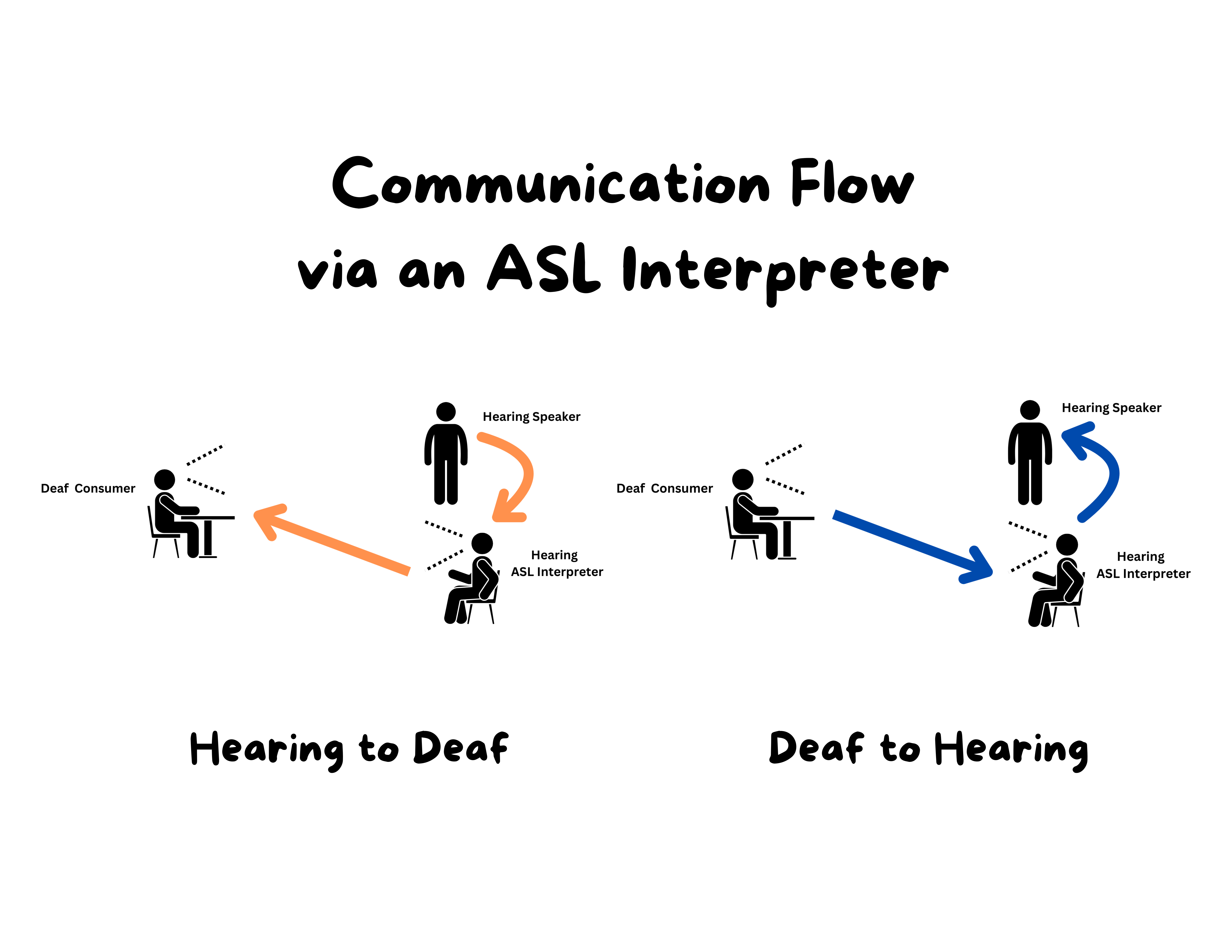
An ASL interpreter’s main job duty is to translate English into American Sign Language (ASL) and vice versa. This means they listen to what is being spoken in English, process it and translate it visually into ASL. They also do this in reverse: watching what is being signed in ASL, process it and translate it into spoken English. They do this back and forth as the situation unfolds, at an even pace, remaining within clear earshot of the speaker and in the line of sight of the signer.
ASL interpreters will not share information about the assignments they interpret. They will not advise or express their personal opinion. Likewise, they will not change, add or otherwise interject themselves into the situation they are interpreting. ASL interpreters are expected to adhere to a code of professional conduct that includes standards of confidentiality, neutrality, professionalism, and respect.

ASL interpreters have been brought in to “faithfully render the message”, even assuming the tone and expression of the speaker or signer. They are ethically-bound to remain impartial.
ASL interpreters are essentially vessels of communication. Think of it this way: Communication (ASL to English and vice versa) flows through them – they are merely the conductor.
Human vessels at that. Who are cordial and respectful upon arrival and departure, but are so effective when they’re able to blend in as much as possible so the communication flows through them easily.
I like to point out that last bit to hearing folks because sometimes they think the interpreter is my “helper”, my MOM or just a general authority figure in charge of yours truly. HAHA. No.
ASL interpreters do the communication thing, not the helping thing.
On a similar note: when speaking to a Deaf person with an interpreter interpreting, speak directly to and look at the Deaf person. Use the Deaf person’s name and pronouns, not the interpreter’s. Avoid phrases like, “Tell her I said..” Try to speak as naturally as you can without interrupting. Err, which is because the interpreter can’t interpret both languages at once, so we have to take turns – not that we don’t love being cut off mid-sentence. Hee-hee.
What are an ASL interpreter’s qualifications?
So, are they magicians or what? Eh, it may seem like it but in reality, ASL interpreters are highly educated professionals who go through a rigorous training and certification process. Let’s look at what qualifies someone to be an ASL interpreter:
ASL and English Fluency
ASL interpreters first must be fluent in both English and ASL, understanding the cultural nuances of each community.
What this means: just as English-speaking Americans have a center of their cultural realm, so do Deaf people who use ASL (who are often bi-cultural by proximity, but the cultural inflections definitely drive and often determine what ASL looks like, so it’s crucial ASL interpreters are well-versed in both cultures). This promotes effective cross-cultural communications.
Education
Nationally certified ASL interpreters usually have a 4 year degree or the educational equivalent based on a combination or college courses, interpreting experience and professional development. Most have completed a specialized Interpreter Training Program (ITP).
Those who are not nationally certified have a high school diploma and are at least 18 years old.
Certification
Professional ASL interpreters work to obtain and maintain a certification which serves as “proof” of their qualifications.
To become certified, applicants must meet the pre-requisite requirements (see fluency and education above) and pay the application fee, pass a written exam followed by a performance exam in which they demonstrate their interpreting abilities and are evaluated by experts.
Once certified, ASL interpreters are required to maintain their certification by: remaining in good standing with the certifying body through payment of dues, satisfying a certain number of Continuing Educational Units (CEUs) through workshops or classes and upholding the ethical expectations within the Code of Professional Conduct.
ASL interpreter certifications include:
- CDI*, CI, CT, NIC, NIC Advanced and NIC Master via the Registry of Interpreters for the Deaf (RID)
Holders of these certifications are considered “Nationally Certified”. While this is the current gold standard, an ASL interpreter’s lack of such certification does not alone reflect a subpar skill set. While it should absolutely be a professional goal as the most skilled professional interpreters are, national certification is also a large investment of time and finances, so realistically, it’s also reflective of these privileges. - Credentials and Assessments
In lieu of national certification, ASL Interpreters may hold either of the following credentials or assessments which alone are indicative of their qualifications in many interpreting scenarios.
- QA or QAS
“QA” stands for Quality Assurance Screening. A QA verifies that an interpreter has been evaluated / approved by a local assessment system usually set up through a state or non-profit agency that provides various services to Deaf and hard of hearing people. These ASL interpreters may also have specialized interpreting skills noted (medical, legal, etc.). The QAS certification system will vary by state. This is Virginia’s VQAS. - EIPA (Educational Interpreter Performance Assessment)
EIPA is an educational interpreter assessment required for K-12 interpreters who do not otherwise hold a “national certification”. Assessments are conducted at the local level.
* CDI certification is limited to Deaf Interpreters (DI) who perform a different function from the generalist ASL interpreters described in this article (who are usually hearing).
- QA or QAS

Where ASL interpreters work
ASL interpreters work in a variety of settings, including but not limited to:
- Legal: courtrooms, meetings, any legal proceeding
- Educational: PreK-12 and college classrooms, assemblies, meetings, clubs and activities
- Medical: doctor’s offices, hospitals, during procedures, meetings
- Employment: job interviews, meetings, conferences
- Community: government offices, social service agencies, workshops, events, public meetings, social gatherings
- Telecommunication/phone use: Video Relay Service (VRS)
- Entertainment: music concerts, theater performances
- Media: those emergency broadcasts(!) or other live telecasts (like the Oscars!)
- Private events: weddings, funerals, gatherings with family and friends
ASL interpreters can work pretty much anywhere, actually.
Why are ASL interpreters important?
I don’t speak for everyone, but as a Deaf person who has used ASL for my entire adult life (that’s a long time, kids), I don’t think there’s a way to adequately explain the importance of ASL interpreters and how they’ve empowered me. Instead, I’ll tell you what my life was like without them.
I was OUTSIDE of it, honestly. I’m not even kidding, there was a circle around each life situation and I stood on the outer rim of it. I would look towards the middle for little cues to connect meaning. The STRAIN to understand. The MISunderstandings. Not knowing. Thinking I knew – only to find out I didn’t get the full story.
Outside of 1:1 conversations and written formats, nothing was completely accessible. I was tired from jockeying for the simplest information sometimes that would have made a huge difference in any number of experiences.
ASL Interpreters changed all of that. Finally, I was inside the dang circle. Now I knew what the hell was going on. Elation. Then, angry at times for what I missed all along. Nevertheless, once I understood what full access was, I was empowered to keep it.
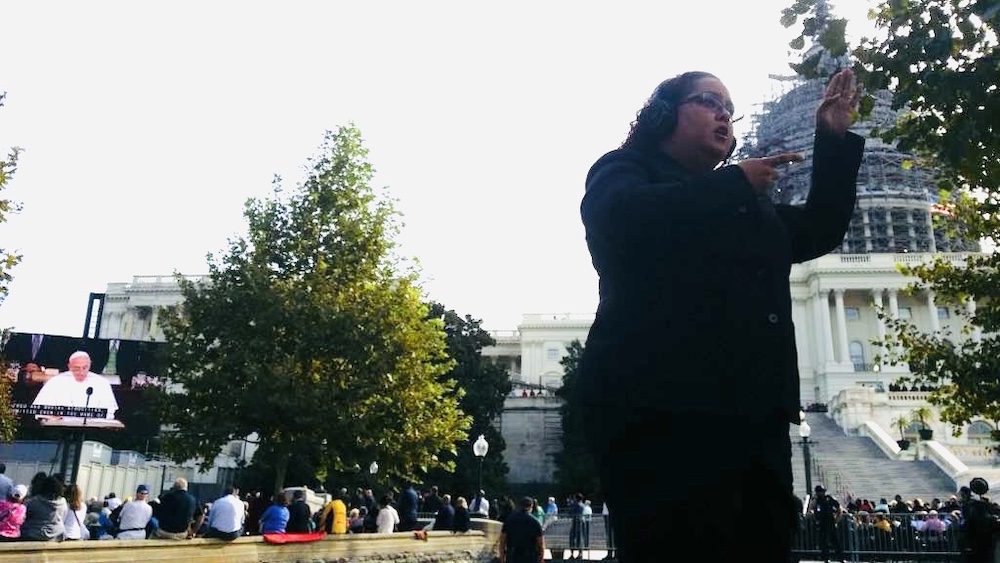
Photo courtesy of Lanie Sign Language Services, Inc.
Since then, I’ve used ASL interpreters (and been empowered thereby) for:
college classes
millions of appointments
the birth of my children
my wedding
church services
medical emergencies
parent-teacher conferences
my kids’ school events and shows
in court (for the record: it was hubs’ traffic ticket, not mine)
making phone calls (via Video Relay Services)
concerts and events
..and more
(because who can remember every event in the past 30+ years of your life)
ASL interpreters have been there for my life. Breathing clarity and power into all these situations that would otherwise be murky – leaving me outside of them. Their presence means I don’t have to contend with flinging myself over communication barriers. Instead, I’m able to be fully present and engaged.
An ASL interpreter gives Deaf people access to the same information as everyone else. Right on.
Common Questions:
Can family members act as ASL interpreters?
While a family member may have the linguistic or technical skills required to interpret what a hearing person is saying into ASL, they should not. Children, especially should never be asked to interpret. Interpreters have an ethical duty to remain impartial as well as keep the information they interpret confidential. This would put family members in direct conflict with these ethical considerations. Also, most of the settings mentioned in this article have a legal obligation to provide reasonable accommodations such as ASL interpreters.
Does this mean ASL interpreters without these certifications do not have the required skills to interpret?
No. Certification is more of a quality assurance. When hiring an interpreter, quality is most important. But unless you are able to assess an interpreter’s skills yourself, their certification can help make that determination. If possible, ask the Deaf person!
Why do we need ASL interpreters when there are already captions available on TV?
Captions are can be difficult to follow in a live broadcast. They are typically behind the speaker, may cut out, have phonetic mistakes and are subject to technical difficulties. They also do not convey the tone or inflections of the speaker, which can cause someone to misread the urgency of a situation.
Also, English is a second language for many Deaf people which they only have access to it in written form (unlike hearing ESOL speakers), so they may have significantly weaker comprehension of it. Having an ASL interpreter on screen resolves these issues greatly. Those who do not have ASL skills may still be able to lipread somewhat – especially when the captions don’t work!
Related Articles:
What is a Deaf Interpreter or CDI?
Paul and Tina Videos: What’s the Big Deal?