

A Deaf Interpreter or CDI (Certified Deaf Interpreter) is a Deaf or hard-of-hearing professional trained in advanced interpreting, cultural mediation, and specialized communication techniques. CDIs work alongside hearing ASL interpreters to ensure Deaf consumers receive accurate, clear, and culturally appropriate access—especially in high-stakes or complex situations.
Many people assume that the visible interpreter is always a hearing ASL interpreter—but that’s not always true. Sometimes the interpreter you see is Deaf themselves, which surprises many hearing people and even some ASL students.
This guide explains what Deaf Interpreters do, how CDI teams work, how they differ from ASL interpreters, and when they’re needed.

What Is a Deaf Interpreter or CDI?
A Deaf Interpreter (DI) or Certified Deaf Interpreter (CDI) is a Deaf professional who:
• possesses native or near-native ASL fluency
• excels in visual, tactile, and culturally grounded communication
• specializes in breaking down complex information
• collaborates with hearing ASL interpreters to improve accuracy
CDIs are experts not only in ASL, but in gestures, visual cues, cultural context, and non-standard communication. They interpret into a version of ASL that is more nuanced, clear, and accessible, depending on the consumer’s language background.

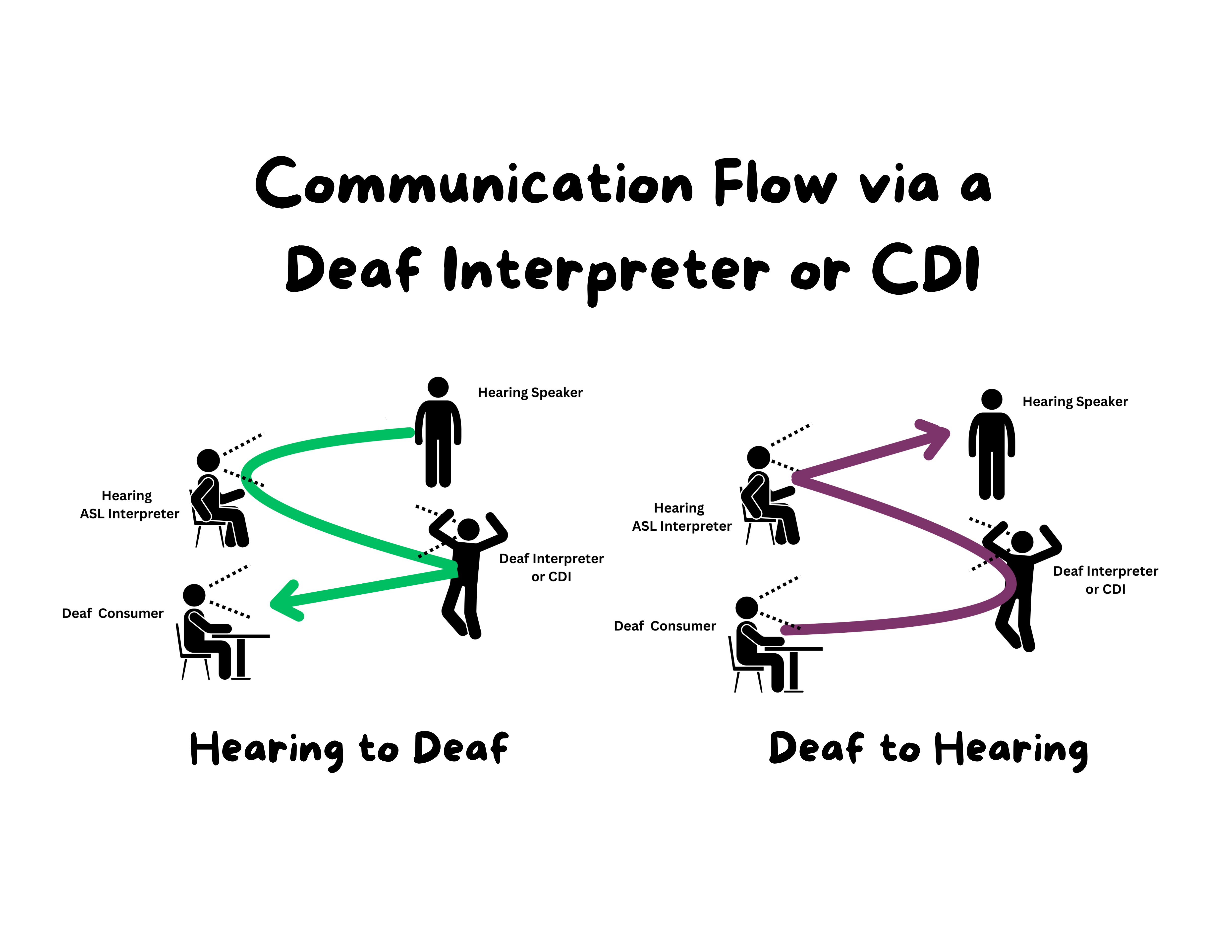
How Deaf Interpreter Teams Work (DI/CDI + Hearing Interpreter)
Most often, a CDI works in a team:
1. The hearing ASL interpreter hears the spoken language and interprets it into ASL.
2. The Deaf Interpreter watches that ASL and transforms it into a more precise, culturally appropriate, or visually accessible message.
3. The Deaf consumer receives a clearer version of the information, tailored to their language needs.
This two-step process is essential when a Deaf consumer may not understand the ASL style or speed of a hearing interpreter, or when the situation requires extremely precise communication.
How Is a Deaf Interpreter Different From a Hearing ASL Interpreter?
Both professionals use ASL, but they serve different roles:
Hearing ASL Interpreter
• hears spoken English
• interprets into ASL
• may or may not be culturally fluent
• works alone in straightforward settings
Deaf Interpreter (DI/CDI)
• sees ASL from the hearing interpreter
• reinterprets for deeper clarity
• brings cultural, linguistic, and experiential expertise
• specializes in high-complexity situations
The CDI is not replacing the hearing interpreter—they are enhancing accuracy.
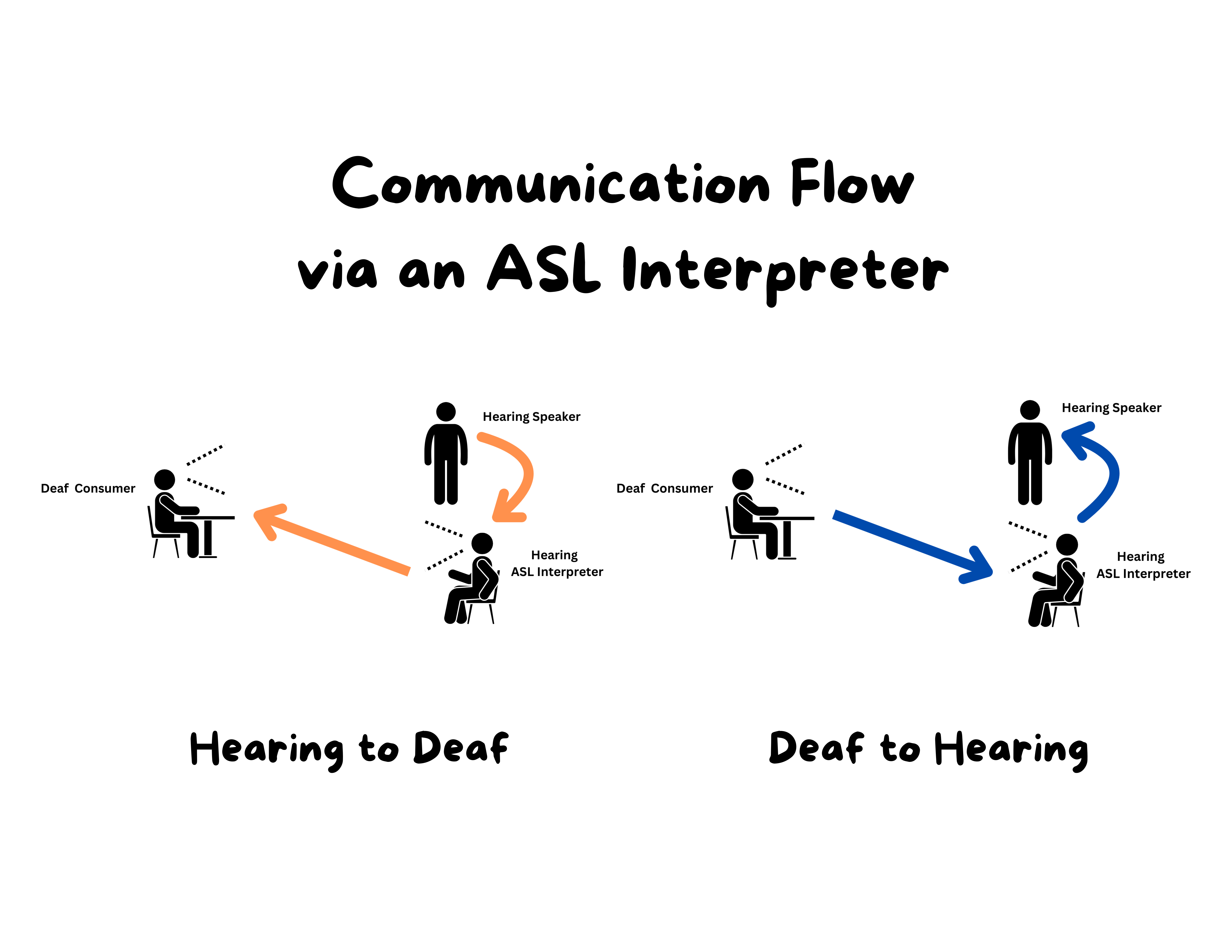
Why a Deaf Interpreter or CDI Is Needed
A Deaf Interpreter is especially critical when:
• interpreting for Deaf children
• working with DeafBlind consumers
• the Deaf person uses non-standard ASL
• the Deaf consumer is from another country
• the Deaf consumer has limited formal language
• the Deaf person recently experienced medical trauma
• the setting is legal, medical, or high-stakes
• a message will be viewed repeatedly (recordings, emergency broadcasts)
In these scenarios, the CDI acts as the A-team, ensuring accuracy, safety, and culturally grounded communication.
Where Deaf Interpreters Work
DIs and CDIs work everywhere ASL interpreters work:
• legal: courts, hearings, depositions
• education: K–12, college, meetings
• medical: clinics, hospitals, procedures
• employment: interviews, trainings, conferences
• VRS (in theory, though limited)
• government events and announcements
• media and emergency broadcasts
• concerts, theater, and performance interpreting
Qualifications of a Deaf Interpreter or CDI
A DI or CDI must:
• be Deaf or hard of hearing
• have advanced ASL fluency
• possess cultural and linguistic expertise
• be comfortable in high-focus, high-stakes environments
A CDI additionally holds certification through RID, which requires:
• a 4-year degree or equivalent experience
• professional training
• written & performance testing
• ongoing CEUs
Deaf Interpreter vs CDI: What’s the Difference?
The roles are similar, but:
• DI = Deaf Interpreter without RID certification
• CDI = RID-certified Deaf Interpreter
Certification is not required by the ADA but may be required in some states or settings.
Why Some Deaf Interpreters Don’t Hold CDI Certification
Reasons include:
• interpreting may not be their full-time career
• certification is expensive and time-consuming
• assignments for DIs are less frequent
• DIs often have other professional careers
• agencies may vet and approve qualified non-certified DIs
Many highly skilled Deaf Interpreters work without certification but are still fully capable and held to ethical standards.
FAQs:
Are Deaf Interpreters required to be certified?
No. The ADA does not require certification. However, some states have additional requirements for legal, medical, or educational settings.
What does CDI mean?
CDI stands for Certified Deaf Interpreter—a Deaf professional who holds certification through RID.
Can a Deaf Interpreter work without certification?
Yes, if permitted by state regulations. Agencies typically vet skill and experience.
When should I request a CDI instead of a hearing interpreter?
In situations involving trauma, language deprivation, DeafBlind consumers, international sign users, children, or any high-stakes setting.
Do DIs interpret for DeafBlind consumers?
Sometimes, but Protactile interpreters are a separate specialization.