
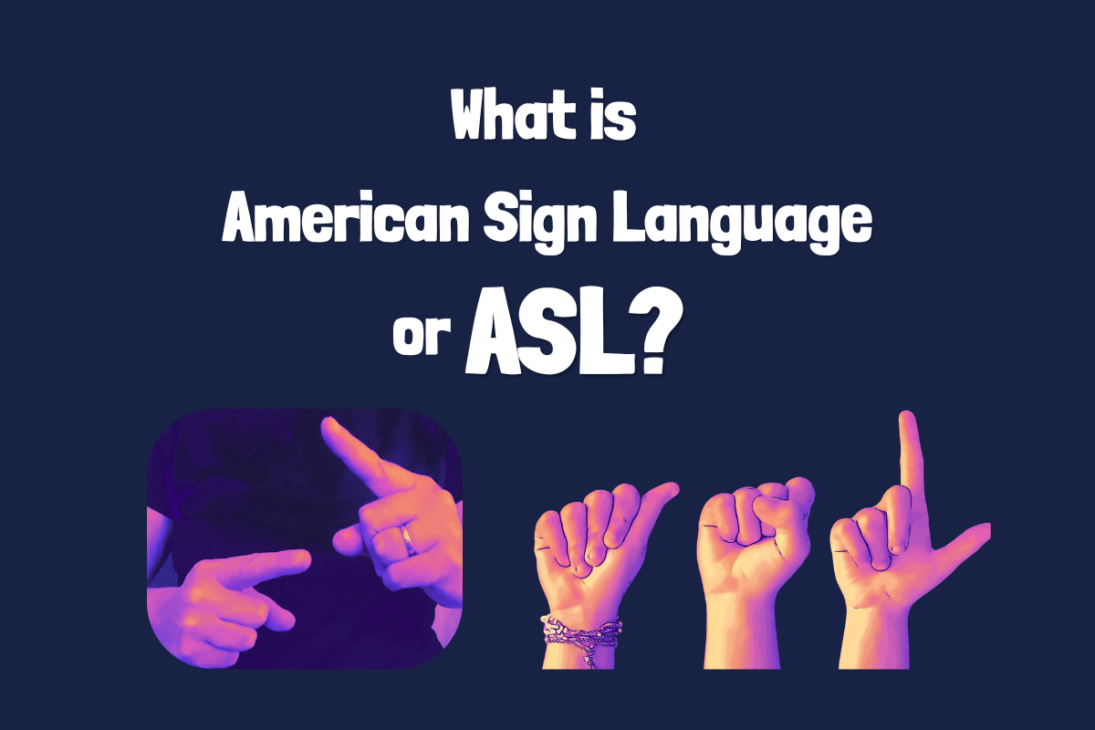
American Sign Language (ASL) is a complete, complex visual language with its own unique grammar and syntax. It is primarily used within the U.S. Deaf community and in parts of Canada.
Contrary to some media depictions, ASL is not “English on the hands” or a direct translation of spoken English. It is not a supplement to speech. ASL is its own language entirely, with a rich history and structure that developed independently of English.
The History of ASL
ASL developed through the merging of several existing sign systems and languages.
In 1817, the first American School for the Deaf was established in Hartford, Connecticut. The school was founded by Thomas Hopkins Gallaudet, who traveled to Europe to learn methods for educating Deaf students, and Laurent Clerc, a Deaf educator from France.
Clerc brought with him knowledge of Old French Sign Language (OFSL). When students arrived at the school, they also brought their own local and community-based signs. These included influences from systems such as Martha’s Vineyard Sign Language and Native American sign systems.
Over time, these different systems blended together, forming the foundation of what would become American Sign Language.
Today, ASL is distinct from modern French Sign Language (LSF), even though they share historical roots.
How ASL Spread Across the United States
Graduates of the American School for the Deaf played a major role in spreading ASL.
As they went on to establish additional schools for the Deaf across the country, they carried the language with them. These schools became central to the growth of ASL and the development of Deaf culture in the United States.
Schools for the Deaf as Cultural Hubs
Historically, schools for the Deaf have served as important cultural and linguistic hubs.
These schools are often places where:
Deaf children receive education in a shared language
Deaf adults work and build community
social and cultural connections are formed
They are rich in resources and opportunities for connection, making them natural environments for ASL to grow and flourish.
For many, these schools represent pride, identity, and unity within the Deaf community.
ASL and the Deaf Community
ASL was created by and for Deaf people and grew within Deaf communities.
It’s deeply connected to the lived Deaf experience.
When learning ASL, it’s important to recognize that you are not just learning vocabulary. You are engaging with a living language rooted in a cultural and linguistic community.
Who Uses ASL?
American Sign Language is mostly used by:
Deaf individuals
Hearing family members of Deaf individuals
ASL interpreters
ASL students
Hearing allies within the Deaf community

What Is the Deaf Community?
The Deaf community is a cultural and linguistic group of people who share:
a common language (ASL)
shared history
shared values
lived experiences
Here, deafness is a cultural identity, not a disability. The disability generally exists among those who do not know ASL. ASL plays a central role in creating a sense of belonging, pride, and connection.
“Big D” Deaf vs. “little d” deaf
These terms reflect identity, not necessarily one’s hearing level.
Deaf (Big D)
Deaf (Big D) refers to individuals who identify as part of the Deaf community and culture, often using ASL as their primary language.
deaf (little d)
This term generally refers to one’s deafness or hearing loss as an audiological condition and may include individuals who do not use ASL or identify with Deaf culture.
Paths Into the Deaf Community
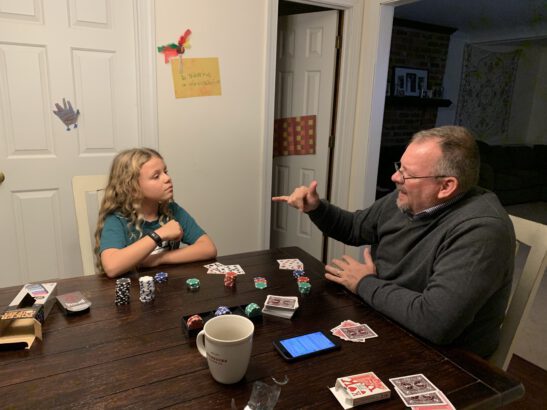
People come into the Deaf community in different ways.
Some are born into it:
Deaf children with Deaf parents
Hearing children with Deaf parents (aka: CODAs or KODAs)
Multi-generational Deaf families
Others join later:
Hearing parents who learn ASL because their child is Deaf
A hearing child learns ASL because their friend or classmate is Deaf
A teacher decides to learn ASL when they have a Deaf student in their class
A hearing neighborhood group begins learning ASL after a Deaf family moves in
Individuals who learn ASL through classes and become involved in the community
The timing and access to ASL can shape how someone connects to the community.
Deaf identity and language choices
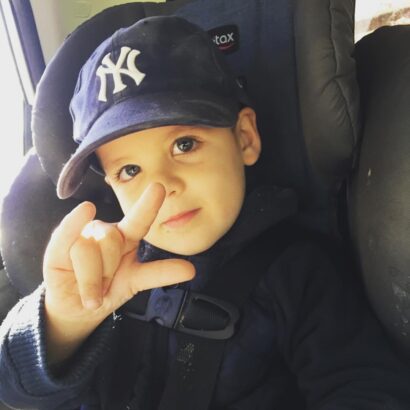
It’s important to recognize that not all deaf or hard of hearing individuals use ASL or identify with the Deaf community.
Language use and identity are deeply personal and tied to individual circumstances.
Learning ASL means learning about Deaf culture and the community
American Sign Language is not a lot of vocabulary signs. Nor is it English on the hands.
Learning it is a journey. One that can take you where they’ve never been before or where you’ve always wanted to go.
It’s an adventure utilizing a visual language, recognizing its cultural roots, and respecting the strength of the community it comes from.
The best traveler comes with an open mind and spirit.
Approaching ASL with this mindset helps build a strong foundation to learning the language, the connection to the Deaf world and its people.
Common Questions
Is sign language universal?
No. Each sign language develops within it’s country of origin and is separate from that country’s spoken language. In fact, some countries have the same spoken language but the sign languages are foreign to each other!
Is ASL hard to learn? How long does it take?
It’s about as hard as learning any new language. It can take several years of continued study and practice to become fluent, but students can absolutely become conversational early. It’s truly a journey with lots of opportunity to practice using it in the community.
I learned signs as a kid but it was a lot like English. Is that ASL?
Sometimes hearing kids learn signs individually or to accompany songs. Historically, other signing “systems” like PSE and SEE were popular among hearing parents and friends, but they vary a lot in use and structure. Only ASL is a language. This article explains the differences.
I know the ASL alphabet. Can I fingerspell what I want to sign?
Well, you could, in theory. However, for new signers it’s about as practical as verbally spelling each word you’d want to speak. Learning ASL is easier, really–and a lot more fun!
