
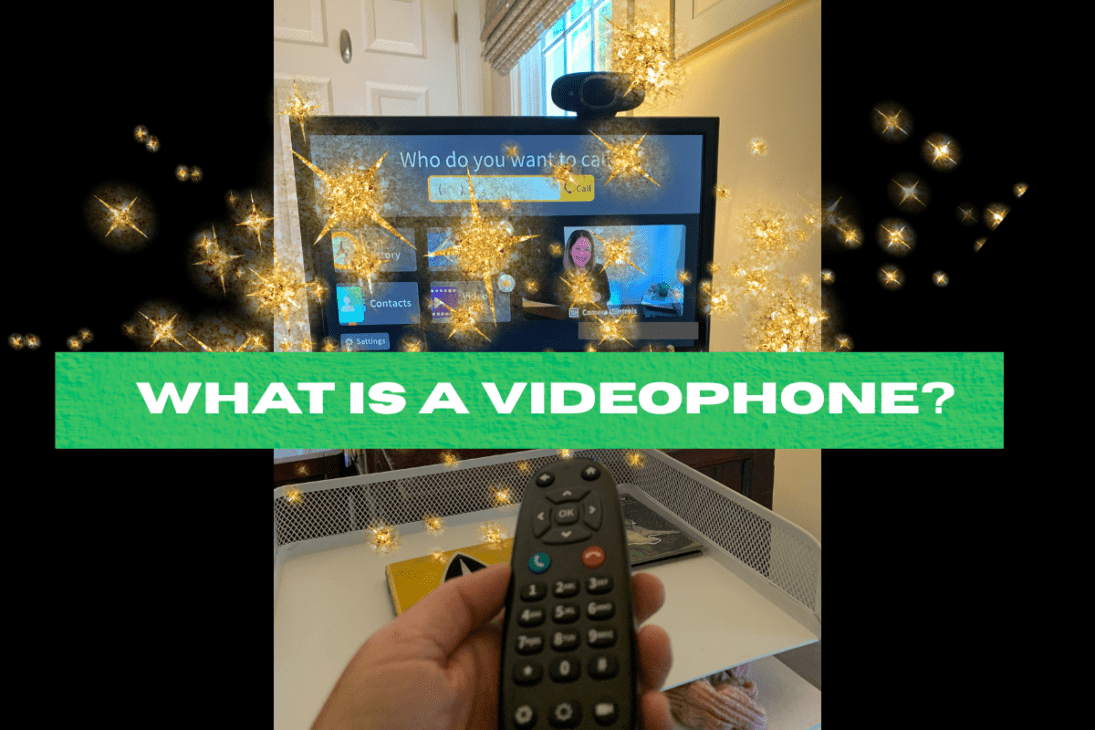
A videophone is one of the most important communication tools in modern Deaf culture. If you’ve ever wondered how Deaf people “make phone calls,” this article is for you. A Videophone, or “VP” allows Deaf people who use ASL to call friends, family, coworkers, and businesses using real-time ASL, not English typing.
Before this video technology existed, Deaf callers relied on TTYs and English-based relay operators. Videophones changed everything — allowing for a more natural communication, furthering independence and empowering Deaf people thereby.

Photo by Sound for Light
In this article, I’ll explain what a videophone is, how Deaf people use it today, and why it continues to be one of the most relied-upon tools in the community — at home, at work, and anywhere reliable internet exists.
I have to admit I was a bit of a holdout in getting a VP. Back in 2005-6, I was a big emailer. I felt like it was a lot of “extra” just for me to make phone calls. Texting wasn’t a widespread thing yet as hearing folks still had their bitty-nokia phones, but I was fine using the TTY + relay when I couldn’t email. Since English is my first language, my initial attitude about VPs was similar to Deaf Interpreters or CDIs–I didn’t see how they applied to me.
As was the case with Deaf Interpreters, I’ve eaten my word feast and then some. Videophones are a bit of a magic wand that have empowered me and most other Deaf ASL users to communicate seamlessly.
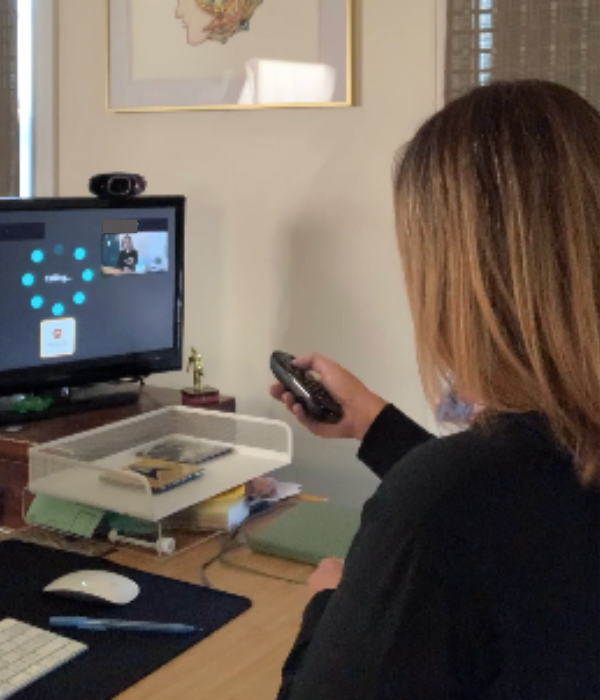
How Videophones Work for Deaf Communication
Videophones allow Deaf people to communicate visually in ASL through live video, either directly with other Deaf signers or through Video Relay (VRS) interpreters when calling hearing people. Unlike TTYs, which required slow, English-only typing, videophones make conversation expressive, visual, fast, and fully accessible in ASL.
Below is a breakdown of how they work and why they matter.
Videophones Let Deaf People Communicate Directly in ASL
At its core, a videophone is simply a device (or app) that transmits video in real time. For Deaf people, this means making phone calls with the ability to sign naturally — using facial expressions, body movement, and full visual grammar — instead of typing on a TTY. In the early 2000s, when VP use was becoming more widespread, this was revolutionary.
Historically, TTYs forced Deaf callers to use English sentences and abbreviations (like “GA” and “SK.”) to facilitate turn-taking. Videophones replaced all of this by allowing true, direct, human conversation in ASL.
Even today, Deaf households and workplaces continue to rely on dedicated videophones for stable, desk-based communication. But the options are not limited to the home or office and certainly more portable.
The Evolution of Modern Videophone Technology to Smartphones and Computers via VP Apps
While early videophones were hardware boxes connected to TVs, today’s videophone technology is a lot slicker.
In addition to the traditional VP, most Deaf people now use a combination of:
Traditional videophones have NOT disappeared
It’s important to note traditional VPs are still widely used in Deaf homes and office settings because:
- It’s a dedicated device – it doesn’t compete with other alerts coming across a computer or phone screen
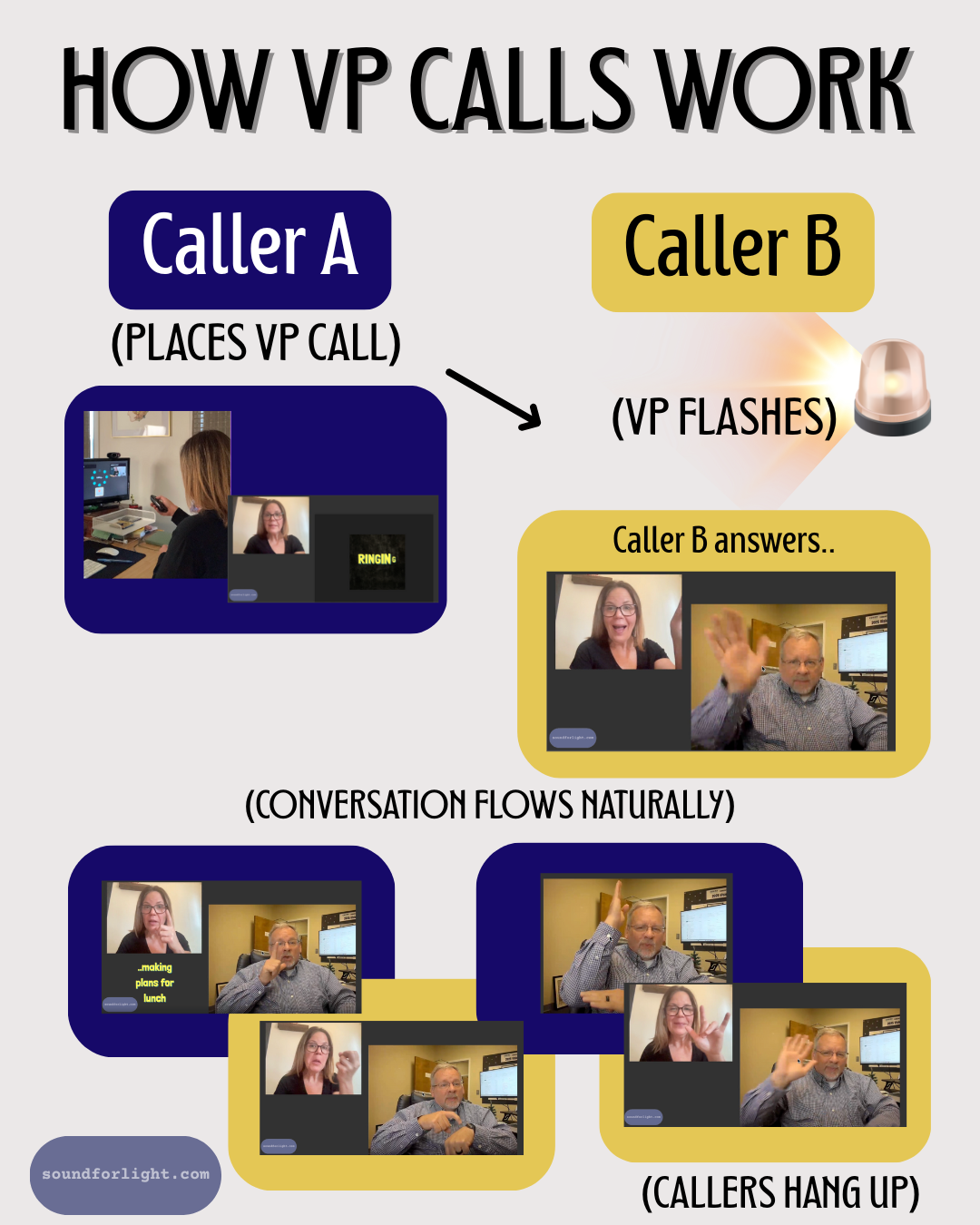
- A standalone device that acts as a “home phone” and flashes to alert someone to a call
- Works without an additional device (like a phone or computer)
- It remains accessible to those who may not have the means for a personal smartphone
- Are free to those who meet the FCC eligibility criteria
- Are often set up in agencies for the Deaf for public use
- Can be more accessible/ergonomic with bigger buttons – helpful for seniors or those with low vision
- they integrate seamlessly with VRS
Videophones Also Connect Users to VRS Interpreters
One of the most powerful aspects of videophones is their connection to Video Relay Service (VRS). This is the real back-pocket-trick part of the magic. VRS allows Deaf users to call hearing people through an ASL interpreter in real time.
For example:
- scheduling a doctor appointment
- calling customer service or smaller places of business without online scheduling systems or chatbots
- speaking with hearing employers
- handling emergencies
The Deaf person signs to the interpreter → the interpreter voices to the hearing person → the hearing person responds → the interpreter signs back.
Videophones make this process fast, natural, and accessible — which is why they remain the preferred tool for VRS calls.
FAQs (Common Questions)
FAQ #1: Is a videophone the same as FaceTime or Zoom?
Not exactly. FaceTime and Zoom allow direct signing between Deaf people, but they are not connected to VRS. Videophone apps (like Sorenson or Convo) are designed specifically for Deaf users and include interpreter access.
FAQ #2: Do Deaf people still use physical videophone devices?
Yes. Many Deaf homes still have a dedicated videophone installed, especially for work calls, long conversations, and consistent video quality. Apps on smartphones are used for mobility, but VPs are still very common.
FAQ #3: Do you need to pay for a videophone?
No. In the U.S., videophones and VRS are funded through the FCC, making them free for eligible Deaf users.